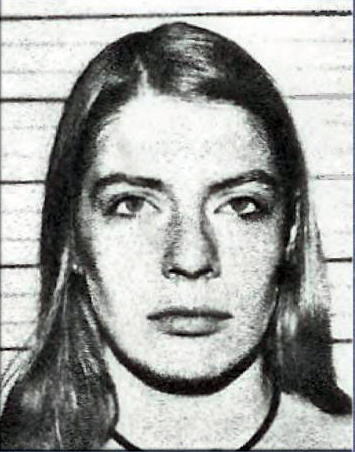
Nearly 50 Years On: The Unsolved Death of Florence E. Lauze at Sherman Lake
Newcastle, ME – August 16, 1975 – On a seemingly ordinary summer day nearly five decades ago, the tranquility of Sherman Lake in Newcastle was shattered by a grim discovery that would launch a lasting mystery: the body of a woman, later identified as Florence E. Lauze.
The shocking find, made on August 16, 1975, at the picturesque lake, immediately drew local authorities to the scene. Details surrounding the circumstances of the discovery were scarce, and the initial investigation focused on identifying the deceased and determining the cause of her death.
While the name Florence E. Lauze became publicly known in connection with the tragic event, specifics about her life, the events leading up to her death, or the full findings of an autopsy, have largely remained out of the public eye. What is known is that a life was lost under mysterious circumstances at a beloved local landmark.
As days turned into weeks, and weeks into months, the initial flurry of investigative activity around Sherman Lake gradually receded. The case of Florence E. Lauze, like many others that defy immediate resolution, transitioned into what is commonly referred to as a “cold case.” Despite the passage of decades, the fundamental questions surrounding her death persist.
For the community of Newcastle, and any surviving family or friends of Florence E. Lauze, the unsolved nature of her demise leaves a lasting void. Cold cases are periodically revisited by law enforcement agencies, often spurred by new advancements in forensic technology, the emergence of previously unknown information, or a renewed public interest.
On Aug. 16, 1975, the body of a woman was found at Sherman Lake in Newcastle (now Sherman Marsh due to a 2007 dam failure). The Aug. 21, 1975 edition of The Lincoln County News reported that “The body of a young woman was recovered from Sherman Lake in Newcastle Saturday, after it was discovered by someone going fishing.”
Found in the water near a bridge on Lynch Road, the victim was believed to be between 16 and 25. She was “wearing a long-sleeve dark blue jersey top, underwear, blue socks, low brown shoes with crepe soles and several pieces of jewelry.”
The identity of the woman was initially unknown, but police speculated that she may have been working seasonally as a waitress. Working out of a makeshift command center at the Pioneer Motel in North Edgecomb, detectives questioned residents and searched the area.
Almost immediately, they hit roadblocks. Lt. William Brown told the LCN: “right now we have nothing new but we’re hoping for a break.” Those with information were asked to contact the state police or local authorities.
The following week, the Aug. 28 edition of The Lincoln County News identified the dead woman as Florence E. Lauze, 19, of Brockton, Mass. Identification was ascertained through photographs, jewelry, and dental records.
The article reported that “State Police say Lauze may have been traveling to Damariscotta when she was killed.” Her father, David W. Norcross, lived on Back Meadow Road at the time of the murder. Her mother lived in Brockton.
By the Sept. 11, 1975 edition of The Lincoln County News, the hitchhiking theory had been solidified. The article reported that “Authorities say Lauze may have been hitch-hiking from her Brockton home to her father’s home, when the apparent murder occurred.” Given that the body was found near Route 1, the theory explained how a woman from Massachusetts was found in Sherman Lake.
By 1977, the case had seemingly dried up. The March 10 edition of The Lincoln County News had an article on the case under the headline “Murder case still puzzles officials.” Noting that the second anniversary of the murder was approaching, the article stated: “Although the date and cause of death can be pinpointed, a recent conversation with authorities reveals police are not much nearer an explanation of the case then they were on Aug. 16, 1975, the day the body was found.” For the next 40 years, the unsolved murder of Florence Lauze disappeared from the pages of local newspapers.
In 2017, Sarah Sherman McGrail, a local author, wrote an article on the case that was published in the Boothbay Register. Seeing the murder on a list of unsolved homicides in Maine, she became intrigued and started extensive research. In a phone interview, she said, “I used to work in Damariscotta and often took the road (where the murder occurred).”
Her research led to contacts with police officials in two states, as well as those who lived near the scene of the crime in 1975. As the first person to cover the story in 40 years, McGrail said the story needed “to be kept alive” after so many years.
In Maine, unsolved murders fall under the purview of the Unsolved Homicide Unit. Funded by the Legislature in 2015, the unit’s webpage states that an unsolved homicide “is a known or potential homicide case in which three years or more has passed without an individual having been charged.” Led by Lt. Jeff Love, the unit investigates murders dating back to the 1950s. Lauze is listed on the page, along with 74 other unsolved murders.

As the 48th anniversary of the discovery approaches, the story of Florence E. Lauze serves as a somber reminder of an unresolved tragedy. The placid waters of Sherman Lake continue to hold their secrets, and the hope for answers in her case remains alive for those who remember the events of that fateful day in 1975.
Authorities typically urge anyone with information, no matter how minor it may seem after so many years, regarding historical unsolved cases to come forward and contact local or state police.