East Millinocket, Maine, was a peaceful mill town, where children played in the parks unsupervised, and most residents kept their doors unlocked.
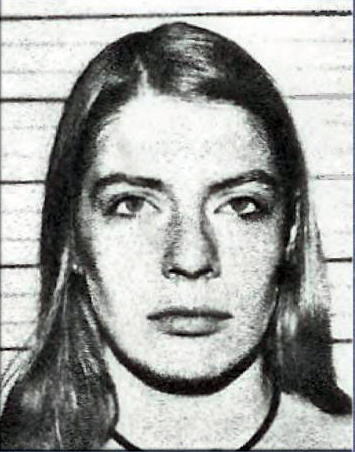
But that sense of security was shattered on August 8, 1980. On that day, Joyce McLain, a spirited and promising 16-year-old, was brutally murdered in the woods behind the high school soccer field. For Nancy Deschaine, chairperson of the Justice for Joyce Committee, the unsolved murder of Joyce McLain is something she’ll never forget:
“It’s there all the time. There’s not a day that goes by that her name isn’t mentioned mainly because she was such a bright, beautiful young girl, so talented. She made such a mark on this town, that people just didn’t forget.”

Young men liked to hang out and drink nearby
Joyce McLain was the kind of teenager that would make any family, or any hometown, proud. She displayed extraordinary musical talent at an early age, and later on played in the school orchestra and composed music of her own. Joyce was an honor student, a cheerleader, and an officer of the student body. According to her mother Pam, Joyce was popular and well-loved:
“Joyce’s mind was filled with thoughts of what kind of a future she was going to have. She was heading into a new step in life. She was getting her driver’s license. She was going to turn 17-years-old. She had a big party planned at the beach with a big band and lots of friends and family was going to be there. I believe that it was a growing up time.”
On Friday, August 8, 1980, Joyce went jogging at 7:30 in the evening. That Friday was the last time Joyce was seen alive. Two days later, Peter Larlee, one of the volunteers searching for Joyce, found her body in the woods behind the high school:
“I saw Joyce. She wasn’t moving. Her body, I think had been beaten. I knew that she wasn’t alive. I started screaming her name. After that I turned and ran home and called the police… that’s really hurting. I never expected what happened at all.”
No one knows exactly what events led up to the death of Joyce McLain. According to Detective Barry Shuman of the Maine State Police, Joyce was last seen jogging towards the soccer field:
“Joyce had a route that took her out around the town and behind Skank High School. And the last time she was seen is turning the corner going down to the softball field and the soccer field where she usually did a number of laps. We have witnesses that say this happened roughly between quarter of 8:00 and 8:00 o’clock in the evening.”

Did the young men attack Joyce as she ran by?
The field was a popular hang out. One theory is that some locals were drinking there and began harassing Joyce. They may have forced Joyce into the woods intending to rape her. Instead, it ended in murder. A second theory is that Joyce was attacked by one or more workers from the local paper mill. Three hundred laborers, who were not local residents, had just been hired. But after intense investigation, the case remains unsolved. For her sister, Wendy, and the rest of the town, Joyce McLain’s untimely death continues to be painful:
“Before she was murdered, all of us kids would all go out, walking… on the street. And after she was murdered, it all changed. The parents were real you know, where are you going, what time are you going to be home. And people never even locked their doors around here. People started locking up their houses. And I mean everybody was just in a panic. It was something you least expect around here.”
Update:
On March 4, 2016, Philip Scott Fournier of East Millinocket was arrested and charged with Joyce’s murder. At the time, Fournier was 19 years old and on the night of the murder he reportedly stole an oil truck and crashed it into another vehicle. In 2008, Joyce’s body was exhumed and the new evidence found helped lead to Fournier’s arrest. The trial lasted a little more than two weeks, and on February 22, 2018, Fournier was found guilty of Joyce’s murder.