Three Decades Later, Austin’s Yogurt Shop Murders Remain a Chilling Mystery
AUSTIN, TX – December 6, 1991, marked a day of unspeakable horror in Austin, Texas, when four teenage girls were brutally murdered at an I Can’t Believe It’s Yogurt! shop. Thirty-two years later, the “Yogurt Shop Murders” remain one of the city’s most enduring and chilling cold cases, with no one ever convicted for the heinous crime.
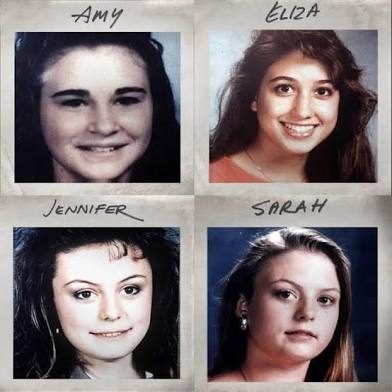
The bodies of Jennifer Harbison, 17, her sister Sarah Harbison, 15, Eliza Thomas, 17, and Amy Ayers, 13, were discovered in the charred remains of the yogurt shop on West Anderson Lane in the early hours of December 7, 1991. The girls, who had been closing the store for the night, were found bound, gagged, sexually assaulted, and shot execution-style. The perpetrator(s) then set the building ablaze in an apparent attempt to destroy evidence.

The sheer brutality of the crime sent shockwaves through Austin, a city unaccustomed to such a level of violence. A massive investigation was launched, drawing national attention and overwhelming the local police department. Leads poured in, but the initial months yielded no concrete suspects, leaving the community gripped by fear and disbelief.
The case saw significant developments in 1999 with the arrests of four men: Robert Springsteen Jr., Michael Scott, Maurice Pierce, and Marcus Johnson. All four were teenagers at the time of the murders. Springsteen and Scott both confessed to parts of the crime during interrogations, with their accounts used as key evidence.
However, the confessions that followed were later recanted, and DNA evidence subsequently failed to link the men directly to the crime scene in a conclusive manner. The legal saga that ensued was protracted and complex, marked by appeals, overturned convictions, and ultimately, the release of all four suspects. Maurice Pierce died in 2010 of an apparent drug overdose, never having been tried or convicted. In 2009, DNA evidence from an unknown male was recovered from one of the victims, further complicating the established narrative and definitively excluding Springsteen and Scott.

The case stands as a stark example of the challenges inherent in complex investigations, particularly those predating modern forensic techniques. Questions have long plagued the handling of evidence, the validity of confessions, and the overall investigative process. Critics point to the reliance on potentially coerced confessions and the failure to secure definitive DNA matches as reasons for the lack of successful prosecution.
For the families of Jennifer, Sarah, Eliza, and Amy, the lack of justice has meant decades of torment. They continue to advocate for answers, their hope for closure undimmed despite the passage of time. Each anniversary brings renewed pain and public reflection on a crime that severed young lives and scarred a community.
The Austin Police Department maintains that the case remains open, although active leads are scarce. Advances in forensic technology, particularly DNA analysis and genetic genealogy, offer a glimmer of hope that new information might surface in the future.
As years turn into decades, the shadow of the Yogurt Shop Murders continues to loom over Austin, a haunting reminder of lives tragically cut short and a mystery that stubbornly refuses to yield its secrets. The pursuit of justice, though arduous, remains a solemn promise for a city still seeking peace.