Wareham’s Lingering Shadow: Three Decades On, The Enduring Mystery of Phillip Alexander’s Disappearance and Tragic Discovery
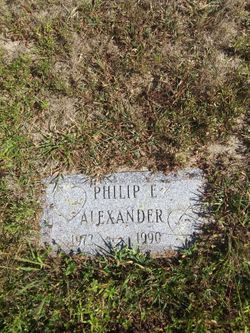
WAREHAM, MA – The vast, whispering pines of Myles Standish State Forest stand as a silent witness to a tragedy that has haunted the community of Wareham for over three decades. On a cold Friday night, February 23, 1990, 18-year-old Phillip Alexander, a Wareham resident, ventured into the sprawling wilderness with four close friends for a drinking party. He was never seen alive again. Three months later, his badly decomposed body was discovered in a latrine at Camp Squanto, a Boy Scout camp nestled near the forest, approximately six miles from where he was last seen. What transpired in those dark hours and the subsequent months remains one of the region’s most enduring and perplexing cold cases, casting a long shadow over the lives of those who knew him and the collective memory of a community.
The story begins with a seemingly typical rite of passage for many teenagers: a clandestine gathering away from adult supervision. On that fateful winter evening, Phillip Alexander, a senior at Wareham High School, left his home with four companions, all intent on a night of youthful escapism and alcohol consumption within the secluded confines of Myles Standish. The specifics of the night are vague and contradictory, pieced together from the accounts of the four friends. Somewhere deep within the forest, in an area known for such gatherings, the group disbursed, and Phillip, by some accounts, wandered off alone. As dawn approached, his friends emerged from the woods, but Phillip was conspicuously absent. Initially, his disappearance was attributed to youthful indiscretion, perhaps a drunken wander or a desire for solitude. However, as hours turned into a day, and a day into several, an ominous dread began to settle over his family and the local authorities.
The alarm was raised, and a massive search effort was launched, mobilizing local police, Massachusetts State Police, environmental police, search-and-rescue teams, and countless volunteers. The sheer scale and challenging terrain of Myles Standish State Forest, a sprawling 15,000-acre wilderness of pine barrens, lakes, and dense underbrush, made the undertaking incredibly difficult. Searchers scoured every inch, battling against the encroaching spring thaw and the inherent difficulties of a vast, natural environment. Helicopters flew overhead, canine units tracked potential scents, and divers explored the frigid waters of the forest’s many ponds. Yet, despite these exhaustive efforts, there was no trace of Phillip Alexander. The initial hope that he had simply gotten lost, perhaps succumbed to exposure, slowly gave way to the chilling possibility of something far more sinister.
For three agonizing months, Phillip’s family endured a living nightmare. Each passing day without news gnawed at their resolve, feeding the uncertainty that is perhaps the cruelest aspect of a missing person’s case. The Wareham community rallied, organizing their own searches, posting flyers, and holding vigils, all hoping for a miracle that never came.
Then, on May 24, 1990, the nightmare took an even darker turn. Staff members at Camp Squanto, a Boy Scout facility located off Federal Furnace Road, were conducting routine maintenance when they made a horrific discovery. In the deep confines of an outdoor latrine, Phillip Alexander’s badly decomposed body was found. The location, approximately six miles from where he was last seen, immediately raised questions: How did he get there? Did he wander that far alone? Or was he transported?

The discovery of human remains in such a state and location immediately presented a monumental challenge for investigators. Law enforcement protocols in 1990, while robust, did not possess the advanced DNA profiling techniques commonplace today, nor the sophisticated forensic anthropology tools that have since revolutionized cold case investigations. The initial forensic examination focused on identifying the body, which was confirmed through dental records, and attempting to determine a cause and manner of death.
From an expert analytical perspective, the circumstances surrounding Phillip’s discovery illustrate the profound difficulties inherent in forensic pathology under such conditions. Dr. Sarah Jenkins, a retired forensic anthropologist who has consulted on numerous cold cases, explains, “When a body is found in a state of advanced decomposition, particularly in an environment like a latrine, crucial evidence that might indicate trauma, such as bruising, specific wound patterns, or defensive injuries, can be obliterated. The process of decomposition, coupled with environmental factors like immersion and the passage of time, significantly compromises the ability to pinpoint a precise cause of death or even definitively rule out foul play.”
The medical examiner’s office, facing these limitations, was unable to definitively determine the cause of Phillip Alexander’s death. This critical lack of a conclusive finding left a gaping void in the investigation. Without a clear cause of death, it becomes exponentially harder to build a case for homicide, if one occurred, or to definitively attribute it to accident or natural causes. Toxicology reports, too, would have been severely hampered by the decomposition, making it difficult to ascertain the role of alcohol or any other substances at the time of death.
The initial investigation meticulously re-interviewed the four friends who were with Phillip that night. Their accounts, while providing some details, never fully explained how Phillip became separated from the group or why he was never reported missing by them in the immediate aftermath. Police investigators at the time were acutely aware of the challenges posed by group dynamics in situations involving alcohol and a young, potentially vulnerable victim. The initial statements, often given under duress and with the passage of time, can be inconsistent, making it difficult to discern fact from omission or deliberate misdirection.
“In cases involving groups of friends, especially when alcohol is a factor, initial statements must be treated with a degree of healthy skepticism,” notes former State Police detective Lieutenant Michael O’Connell, now a private investigator specializing in cold cases. “Memories can be clouded by intoxication, fear of repercussions, or even group loyalty. Over time, these narratives can solidify, making it very hard to crack if there’s an element of untruth or omission. Every detail, every inconsistency, becomes paramount.”
The six-mile distance between the last confirmed sighting and the discovery location is another perplexing aspect. Was Phillip disoriented and wandered the distance? If so, why wasn’t he encountered by any of the extensive search teams, particularly in the initial days? Or was he transported to the latrine? If he was transported, it strongly suggests foul play, as an individual in distress would unlikely choose such a location. The latrine itself, a confined and unsanitary space, raises troubling questions about the circumstances of his death and how his body came to be there.
Despite two grand juries hearing evidence about the circumstances from the four men who were with Mr. Alexander, there have been no indictments, no charges brought and no exact cause of death determined.
Over the years, despite periodic reviews, the case of Phillip Alexander has remained open but unsolved. It exemplifies the “cold case conundrum,” where the passage of time, the degradation of evidence, the fading of memories, and the lack of new leads contribute to a stagnant investigation. Cold case investigators often face a race against time, not just with physical evidence degradation, but with the human element. Witnesses move away, their memories dim, or their willingness to speak openly diminishes.
For the Alexander family, the absence of answers has been an enduring source of pain. The inability to understand what truly happened to Phillip has denied them the closure so many families desperately seek. This perpetual state of uncertainty, a phenomenon often described as “ambiguous loss,” can be profoundly traumatizing, making the grieving process complicated and unending. Each anniversary of his disappearance, and later his discovery, serves as a poignant reminder of the questions that linger.
The tragedy also left an indelible mark on the Wareham community. It served as a stark reminder of the potential dangers lurking even in seemingly innocuous situations, particularly for young people venturing into the vast wilderness. For many who remember, the story of Phillip Alexander is a cautionary tale, whispered in hushed tones, a local legend tinged with profound sadness and unanswered questions.

Today, more than three decades later, the Massachusetts State Police continue to list Phillip Alexander’s case as an open investigation. While technologies have advanced significantly since 1990, allowing for the re-examination of old evidence with new techniques, the fundamental challenges remain. Many unsolved cases are eventually cracked not by new evidence unearthed at the original scene, but by a belated confession, a sudden surge of conscience, or a re-examination of existing files with fresh eyes and new technologies, sometimes prompted by public awareness campaigns.
The hope in Wareham, particularly for those who knew Phillip, is that one day, the silent pines of Myles Standish and the murky depths of the Camp Squanto latrine will finally yield their secrets. For the Alexander family, and for the collective conscience of the community, the pursuit of truth and justice for Phillip Alexander continues, a testament to a young life tragically lost and a mystery that stubbornly refuses to fade. Investigators encourage anyone with even the slightest piece of information, no matter how insignificant it may seem, to contact the Massachusetts State Police Unresolved Cases Unit. Every detail, even after all these years, could be the key to finally bringing closure to this enduring Wareham mystery.