Texans often handle problems themselves, and Tim Miller was no different. In 1994, Miller went to Robert Abel’s house, a retired NASA engineer known for his quiet nature. He confronted Abel outside his home, and they quickly got into an argument. Miller pulled out a .357 revolver, pressing it to Abel’s head and demanding that he confess to being a serial killer.
As Miller looked into Abel’s face, he thought it seemed oddly unshaken. Suddenly, a wave of anger left his body. He chose not to shoot, believing two things: if Abel was a serial killer, killing him would stop the chance to find his other victims and give their families closure. If Abel was a psychopath with no remorse, killing him would serve no real justice.
Miller then turned and walked away, breaking down in tears. He drove himself to a hospital and checked into the psychiatric ward. When he left ten days later, he realized he couldn’t continue as he was. He needed to find better ways to deal with his pain.

But his fight was far from over.
Sometimes, women seemed to disappear completely. Their bodies were never found, and their faces appeared only in old high school yearbooks or as drawings, imagining what they might look like now.
Other times, investigators uncovered victims he left behind. These unknown victims would be forever linked to police cases with generic names like “Jane Doe” or “Janet Doe,” and they would rest in the morgue.
All the bodies were found close to Texas’s I-45 highway. The road winds through Houston’s city limits and reaches the coast, ending at Galveston Island. Over the years, police and others have called it the “highway to hell.”
Journalists and law enforcement officials believe at least 30 women and girls were abducted, raped and murdered between the 1970s and early 2000s – the victims of a series of overlapping, possibly unrelated, killers, who turned the area into a kind of Bermuda Triangle of violence and sexual predation.
For three decades, killers stalked the area with apparent impunity. In recent years, thanks in part to improvements in forensic technology, law enforcement agencies have arrested or named suspects in some of the killings.
Many cases, however, remain unsolved – including the case of Tim Miller’s own daughter, Laura.
In 1984, Laura, a 16-year-old girl, was kidnapped and killed by an unknown attacker. Her death prompted Miller to act alone, organizing search parties and pushing police to investigate. He worked tirelessly to find not just Laura but also other missing women in the area.
Miller gained a reputation for finding missing people or their bodies. Families and police across the country turned to him for help. His cases ranged from missing dementia patients and lost children to planes lost over the ocean and suspected murders. It was a flood of difficult cases, both cold and active.
In 2000, Miller created Texas EquuSearch, a nonprofit organization focused on search-and-recovery. Since then, his team has helped with hundreds of missing persons cases. They have found more than 400 people alive and 238 bodies, according to the organization. His team searches in every water body imaginable—rivers, lakes, ponds, bays, bayous, and canals—using tools like scuba gear, sonar, and small robotic boats.
When he is not working underwater, Miller often searches underground. He once dug up foundations beneath a house, looking for bodies. Although he didn’t find any, he uncovered a strange hollow that looked like a body might have been hidden there.
Even when not actively searching or working his construction business, Miller keeps digging. He told me he spent a day moving dirt with his tractor. “It’s how I relieve stress,” he said.
At 71, Miller looks like a spring coiled tight. Though rusted, he is still strong. He moves constantly, pacing in his cowboy boots, fidgeting with cigarettes, balancing a phone between his shoulder and ear, talking to victims’ families, FBI agents, and deputies.
The case that has haunted him most is the one that started his work—his daughter’s murder. It remains unsolved after all these years. But now, he believes he knows who was responsible.
If Miller could turn back time like rewinding tape, he would stop his daughter on September 10, 1984. That was the day Laura went to a nearby gas station to use a payphone. The Millers had just moved into a new house in League City, and their phone lines were not yet installed. Laura wanted to call her boyfriend. After that, she was never seen alive again.

Laura had seizures, so when she didn’t return home, her parents first checked area hospitals. They found nothing. Tim and Janet Miller then reported her to the police. Laura also struggled with depression and anxiety. Her favorite activity was singing, but her confidence was shattered after a humiliating seizure during a school Christmas recital. Because of her mental health issues, police officials initially considered her a possible runaway or suicide case.
No one noticed that Laura had disappeared nearly a year after another woman had gone missing. That woman had been at the same gas station, using the same payphone.
Heide Fye, a 23-year-old waitress, vanished on October 10, 1983. On April 4, 1984, a couple in League City found their dog playing with something in their yard. It was a human skull. The dog had dragged the skull from a nearby overgrown oil field along Calder Road, an empty feeder road off I-45. The skull had been brought home to show the couple’s young child.
Investigators soon found the rest of Heide Fye’s body in the oil field. She appeared to have been beaten to death with a blunt object. Police had no clear leads, and her family was left to grieve. The world moved on without answers.
When Miller linked the two cases, police and local media dismissed his claims. He recalls they called Laura a “known runaway” and Heide Fye a “drug addict.” These labels angered him even after 35 years.
Miller asked police to search the oil field on Calder Road where Fye’s remains were found. They refused. He also wanted permission to search the site himself. The League City police department did not respond to interview requests.
Two years later, boys riding dirt bikes near the field noticed a bad odor. They thought it was a dead animal. Investigators found the body of an unknown young woman. She had been shot and left propped against a tree, about 150 feet from where Fye’s body was found. She was identified as Jane Doe.
While exploring the site, police also found the skeleton of Laura Miller.
Tim Miller had already had a tough life before his daughter disappeared. As a child he was abandoned by his parents and lived with a series of abusive relatives. His adult life wasn’t much better; his infant son died in the crib and, a year before Laura was murdered, his brother killed himself. Throughout he’d managed to endure – until Laura.
Now his life collapsed. God hated him, he believed, and was punishing him for some reason Miller didn’t understand. He began drinking. He and Janet divorced. He sank into his anger and despair like a strangely comforting cocoon. He spent long hours replaying the circumstances of Laura’s disappearance, thinking about what he might have done differently, fantasizing about revenge.
When her body was found, Laura appeared to have been dead longer than Jane Doe, the unidentified woman found next to her. Because of her more advanced state of decay, the medical examiner was unable to identify the specific cause of death.
Like the other two bodies found in the oil field, Laura’s was propped against a tree, facing the sky, in a manner suggesting their killer liked to return to admire his work. Miller began staking out the field. Night after night he lay in wait with a gun, drinking and smoking in the dark, watching for Laura’s killer to show himself.
He had one idea who might have done it. A man who lived down the road from the Millers when they lived in Dickinson, Clyde Hedrick, had recently served a short stint in prison for a strange incident that occurred the same year Laura was killed.
Hedrick was a sociable guy. He was leanly handsome – before a much later bout of jaw cancer, his most striking feature was his jawline – and a good dancer. One July night in 1984, he was hanging out at a nightclub he frequented, the Texas Moon, drinking and dancing with acquaintances, when they introduced him to a 29-year-old woman, Ellen Beason. At some point that night Hedrick and Beason left the club together. The next day she failed to show up to work.
When confronted by authorities, Hedrick said that Beason had drowned while skinny-dipping and he’d panicked and hidden the body. The corpse was in a ravine near the Galveston Causeway, under an old sofa. The Galveston county medical examiner ruled Beason’s cause of death indeterminable, so Hedrick was convicted only of abusing a corpse, a minor offense, and sentenced to a year in jail.
From Laura’s boyfriend, Miller heard that Hedrick knew his daughter and sometimes talked to her when she passed his house. One time she and some friends even apparently visited his house to buy pot.
Miller took his research on Hedrick to law enforcement officers. They were unimpressed by the rather circumstantial case he sketched for them.
In 1991, five years after Laura’s body was discovered, horseback riders on a path through the Calder oil field came across another female body. The fourth woman discovered there, she appeared to have been killed with a blunt instrument. Like Jane Doe, this victim could not be identified, so police dubbed her Janet Doe. Unlike Jane Doe, Laura Miller and Heide Fye, Janet Doe was laid out in the open, face-down, leading investigators to speculate that she was killed by a different person.
Miller still thought Hedrick might be responsible for the first three victims. By this point the 25-acre plot had earned the name locals had taken to calling it: “the killing fields”.
Miller accused the League City police and Galveston county medical examiner of incompetence, noting that Laura and Jane and Janet Doe had all probably died after authorities knew a killer was in the area. It was time, Miller decided, to open his own investigation. He tracked down the owner of the oil field and persuaded him to let Miller lease it for $10 a year.
Miller was convinced that out there, somewhere in the clay, was the clue to his daughter’s killer. He organized volunteers to canvass the land for bodies and evidence. He drained a pond. He combed the land with cadaver dogs; he attacked the land with a backhoe. Every time a dog signaled, or a volunteer noticed a piece of litter, or he had any kind of hunch, he dug another hole.
Soon the field was pitted with craters. It began to seem as if he was at war with the earth itself.
But by then there was a new development. Police finally had a suspect, and it wasn’t Clyde Hedrick.
It was Robert Abel, the retired Nasa engineer, and he owned a ranch right next to the killing fields.
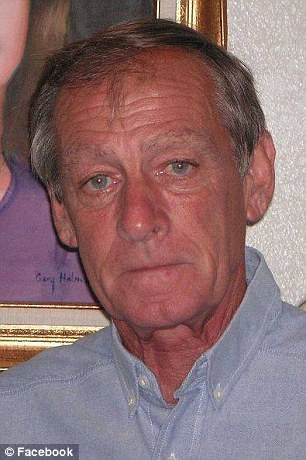
Robert Abel was a “strange character”, Miller says, though not one who would strike most people as menacing. “A slightly built 60-year-old with thinning brown hair and a mustache, Abel walks stiffly because of a bad back, wears reading glasses, and takes pills for his high blood pressure,” journalist Skip Hollandsworth wrote in 1999 in Texas Monthly. He seemed “almost shy”, Hollandsworth added, someone who “tends to put his hands in his front pockets when he speaks”.
Abel was the scion of an old Texan ranching family, and a brilliant engineer. He was recruited by Nasa shortly after graduating from university, and helped design the Saturn rockets that got the Apollo astronauts to the moon.
In 1983 Abel moved to League City. He leased a thousand acres of pasture on Calder Road, adjacent to the oil field, and in 1990, shortly after retiring from Nasa, he bought another 11 acres next to the oil field. He transformed the property into “Stardust Trailrides”, a recreation center where companies could hold western-themed employee days and people could take photos of their children riding ponies.
Investigators approached Abel after they discovered Janet Doe, the fourth body in six years, in the oil field. They were surprised by Abel’s enthusiastic, almost overenthusiastic, interest. He asked lots of questions about the investigation; he offered to help any way he could; he even loaned horses and a backhoe to aid the police search of the nearby land.
Of course, wouldn’t anyone be interested if four dead bodies were found right next to his property? Wouldn’t he ask lots of questions? Wouldn’t he offer to help any way he could? But something about Abel struck police as off.
Then League City detective Gary Bittner received an unexpected phone call from Abel’s third ex-wife, Paula Myers. Abel had a sinister side, she said, and explosive bouts of anger and cruelty. He had never hurt her, but she’d witnessed him beating his horses, a claim corroborated by Cindy Jacobs, another of Abel’s ex-wives. Jacobs’ marriage to Abel had ended after only 41 days, and their friends and acquaintances had always wondered what happened. Now investigators learned the reason. Jacobs had declined sex with Abel one evening and, she said, he flew into a frightening rage.
Myers told police another strange detail: when livestock died on Abel’s ranchland, he left their bodies out to be eaten by scavengers. Hearing that, one couldn’t help but think of the four bodies posed and left to rot in the oil field. But who would dump multiple bodies next to his own property?
The League City police and the Houston FBI asked the FBI’s Behavioral Science Unit in Quantico, Virginia, for assistance in compiling a profile of the killer. Results came in: the killer would be highly intelligent, arrogant about his intelligence, and given to outbursts of anger. He would have a history of bad relationships with women and cruelty to animals. He might live near the crime scene. He would closely follow news coverage of the killings and, if presented with the opportunity, he might try to infiltrate the investigation under the guise of assisting.
Although the police had no evidence linking Robel Abel to the murders, in 1993 they used the FBI profile to convince a judge to grant a search warrant. Investigators searched Abel’s house and property for 12 hours. They took a gold tooth they found, in case it was a souvenir Abel had taken from one of the victims; they took his guns, to check them against a bullet found in Jane Doe; they took news clippings he’d collected about the killings; they took his collection of amateur photography, in case he’d photographed the victims; they even took the cords from his window blinds to see if they could have been used for strangulation.
The police tested everything and arrived right back where they started. The tooth was Abel’s. The bullet from Jane Doe was too corroded to match to Abel’s guns. The photos yielded nothing. There was still no physical evidence linking Abel to the killings
But Tim Miller had been following the investigation carefully, and now he, too, believed Abel had killed his daughter
Miller decided that if the police couldn’t prove Abel had done it, he would. “I made Robert’s life pretty miserable,” Miller told me. “To say the least.” He began parking his car outside Abel’s house, making no effort to conceal his surveillance; he wanted Abel to know he was watching. “I would go by his house so much it was nuts,” Miller said. “Two, three times a day.” He left threatening messages.
Abel got a restraining order. Miller kept watching Abel’s house anyway, parking his car a few feet past the property line. One day, according to the 1999 Texas Monthly article, Miller called Abel and told him he planned to kidnap him, drive him to Nevada, and bury him alive in the desert.
He didn’t. But he did confront Abel outside his house, put a .357 to Abel’s head, and demand he confess to killing Laura, before driving away and checking himself into the hospital. (Abel later denied the gun incident occurred, possibly, according to Miller, because Abel was embarrassed.)
In the years that followed, Miller threw his energy into helping missing-person searches across the country, and became a frequent guest on unsolved-crime shows like America’s Most Wanted. One of the lessons he’d learned from Laura’s disappearance was the importance of stoking attention on cases: keep the media interested, and the police under pressure.
Then it happened again. In April 1997, 12-year-old Laura Smither disappeared while jogging near her Friendswood home. Her body was found later that month in a retention pond in Pasadena. Four months later, 17-year-old Jessica Cain disappeared, and her empty car was found on the side of I-45. People wondered if the killer was back or it was a new one.
After Cain disappeared, Miller and two hundred local people decided on a unilateral search of Abel’s property, without a search warrant and without his permission. They marched on to the ranch and raked it over, looking for bodies. They found none.
By this point, Abel was a lonely man. His once-prosperous trail-rides business was going under for lack of customers, a blow that struck particularly hard. “Robert was a rocket scientist, literally, but a country boy at heart, and he loved Stardust Trailrides,” Miller says.
A disturbing realization began to nag at Miller. What if Abel wasn’t guilty?
And then another. What if it was Hedrick all along?
Miller told me he deeply regrets his role in rallying people against a man he believes in retrospect was not guilty. The two men reconciled a few years before Abel died. They passed each other driving and Miller hailed him. They pulled their cars over and Miller approached him. “I said: ‘I’m gonna ask for forgiveness, and I know I do not deserve it.’” He asked Abel if he could hug him. They both cried.
In 2005 Miller was working a search in Aruba when an FBI agent called.
“Did you hear the news?” the agent said. “Robert Abel is dead.”
A train struck Abel as he drove an ATV over a rail crossing near his family ranch in Bellville. The train engineer later told Miller that Abel was braked next to the rail crossing, watching the train, waiting.
In 2010, Miller approached Richard Rennison, an FBI agent, and Tommy Hansen, a lieutenant with the Galveston sheriff’s office, to urge them to investigate Clyde Hedrick as a suspect.
The timing was good; Hansen had recently retired but stayed with the Galveston sheriff in a special part-time position, working the office’s cold cases. Miller persuaded them to look at the research he’d compiled, and they agreed to form a taskforce. The first item on their agenda was taking another look at the case of Ellen Beason, the woman who supposedly drowned in Hedrick’s company in 1984.
Hansen and Rennison learned something interesting. In 1993, the police had quietly exhumed Beason’s body and sent it to be evaluated by Harrell Gill-King, a forensic anthropologist at the University of North Texas. During the original investigation, the Galveston medical examiner, William Korndorffer, had declared Beason’s cause of death indeterminable; but Gill-King took one look at her remains and saw that her bones had never been properly cleaned.
After cleaning her skull he found a long fracture, the kind that could only have been inflicted by considerable force.
In the spring of 2012, Rennison and Hansen ordered Beason’s remains again exhumed, and again sent to Gill-King for autopsy. A new cause of death was issued – homicide. On 4 April 2013, 28 years after he was convicted of tampering with Beason’s corpse, Clyde Hedrick was arrested for her murder.
Shortly before trial, three inmates in jail with Hedrick contacted the prosecutor’s office. They claimed that during a jailhouse conversation Hedrick had not only admitted to beating Beason to death with a table leg but also to murdering Laura Miller and Heide Fye. He’d bragged about having sex with Laura before killing her.
During the trial the prosecutors filed a document, State’s Notice of Intent to Use Evidence of Other Crimes, Wrongs, or Acts, containing a number of allegations apparently sourced from Hedrick’s ex-wives, ex-girlfriends, jailmates and others. Although the allegations, most of which are unproven and speculative, have no legal bearing, they paint a dark pattern.
In addition to accusing Hedrick of physically assaulting former partners and molesting their children, the document alleges that in 1984 “the Defendant had sexual intercourse with the deceased body of Ellen Beason”; that between 1991 and 1993 he “would come back home with a different shirt and would be saying repeatedly that he had ‘done it again’”; that “on or about 1996” he “came home with a bloody knife”, asked his then wife to “get rid of it” and “dyed his hair and shaved his beard”; and that in 2013 Hedrick “stated that he has murdered four to five women during the course of his life”.
Miller sat in the courtroom every day of the trial, staring at Hedrick. “We had a lot of staring contests,” Miller told me, “and I won every fucking one of them.” Miller never spoke, but the jury probably got the message. The facts of the case were too hazy to prove Hedrick intended to kill Beason, however, so he was convicted of involuntary manslaughter and sentenced to 20 years in prison.
The letter arrived in a plain envelope addressed in tight, careful cursive. A little salutation – “God Bless Always” – was scrawled over the back flap, perhaps as a greeting to the prison censor. The sender’s return address was Terrell prison in Rosharon, Texas.
Four weeks earlier, I had contacted Clyde Hedrick to hear his side of the story. In his letter, he was steadfast that he never killed anyone, and he accused Miller of leading a campaign of persecution against him.
“Two trials two times for the same thing,” he complained:
“One not Guilty, one Guilty, because of Miller and his friend[s]!! I get 20 years, I’m on my sixth year now. My wife and daughter and friends still come to see me for a little moral support and pray that I’ll come home soon. They [know] I didn’t do it I had no contact with Miller girl at all anytime, so help me God, I didn’t do anything to anyone.”
Hedrick argues he couldn’t have caused Ellen Beason’s death. For one, he wrote, it wouldn’t have made sense for him to kill Beason, given that numerous witnesses had seen them together that night. (“All know where we are going so why would I go and kill her. Bullshit!!!”)
He also reiterated his claim that his decision to hide Beason’s body was motivated by fear of being wrongly accused of her death. In response to a key point raised during trial – that drowned bodies sink, rather than float, as Hedrick described Beason’s body doing to investigators – he suggested that Beason actually died in the water of a drug overdose.
“Miller got alot of people to think I’m the League City Killing Field Serial Killer,” he added, describing Miller as a vindictive man with a compulsive need to point blame. “I’m the fourth man he sayed got to be the one. All of us caused his daughter death. Come on. [I want] this nightmare over and behind me!”
In a phone conversation, Hedrick’s common-law wife, Gladys McKnight, told me Miller had ruined her life. “That was one of my biggest fears all my life, growing old alone, and that’s what looks like is happening. I was used to Clyde taking care of me. I still miss him, and still love him. I’ve been in abusive relationships, and Clyde was kind to me. He never raised a hand to me.
“Most 71-year-olds are sitting on La-Z-Boys, watching Oprah with their friends in the nursing home,” Miller said, grinning, or perhaps grimacing, at the image. “I ain’t ever had bedsores.” He leaned against his pickup.
It was a hot afternoon on his small, seven-acre ranch in Santa Fe, Texas. His horses grazed in a pasture. Behind us was the barn where he houses EquuSearch’s fleet of boats and trucks. Inside, the barn was cool and smelled like soil. Hanging from the wall were several huge sieves; on searches he uses them to sift bone fragments from dirt, like panning for gold.
Miller prefers his hands, and mind, occupied with a task. On the rare moments he’s still, he has time to think – and when he thinks, he says, he gets into “trouble”. So he works. When he isn’t working a search operation, or his daughter’s case, or managing his construction business, Miller is out on the ranch, tending to the horses or repairing outbuildings.

If Clyde Hedrick really did kill Laura Miller, he might find forgiveness from an unlikely quarter. It took him at least 25 years, Miller reckons, to come to a point where he could forgive his daughter’s killer, but he has.
Rape-murder is a capital offense in Texas, meaning Hedrick could face the death penalty if convicted of killing Laura. Were it up to Miller, however, he’d grant full immunity to Clyde – as he always calls him, although they’ve never met – in exchange for a confession and the identities of other victims. He wants to give closure to their families, even though, he knows from experience, true closure is a myth.
Are monsters born, or made? That question – nature versus nurture – is the most fundamental in criminology, and it cuts to the heart of questions about human nature and the assumptions underlying our justice system. Forensic psychologists believe serial rapists and killers develop an obsessive need for control as a response to humiliation and shame in childhood. In a sense, they are products as well as transmitters of trauma.
Clyde Hedrick had a traumatic childhood, according to Miller, who, at this point, probably knows more about Hedrick than almost anyone. Hedrick’s father went to prison and his adoptive stepfather allegedly abused Clyde and his siblings “physically, emotionally, and sexually”.
Yet Miller did not become an alleged killer, and his own childhood was arguably just as bad. His father, a gambling addict, walked out on the family when he was a child. One day when he was six months old, his mother put Tim in a dresser drawer and set the house on fire with him and his brother inside. One good thing did happen to him, though. After a string of horrible experiences, the teenaged Tim was taken in for five years by a farm family in Ohio.
“They gave me that little bit of structure, little bit of unconditional love that I needed,” he said. “If they hadn’t taken me in, I truly believe I would be dead or in prison today.”
Miller claims he’s bought a Bible for Hedrick and underlined passages in it about forgiveness. He told me he plans to give it to him if he ever has the opportunity.
I wondered if he’d underlined the Parable of the Lost Sheep: Which of you men, if you had one hundred sheep, and lost one of them, wouldn’t leave the 99 in the wilderness, and go after the one that was lost, until he found it?