Fifty Years On: The Enduring Mystery of Rita Jolly’s Disappearance in West Linn
West Linn, OR – The perplexing disappearance that has haunted the community of West Linn for half a century. On the evening of June 29, 1973, 17-year-old Rita Jolly left her residence for what was intended to be a routine walk, a decision that would plunge her family and local authorities into an enduring mystery. She was last seen in the West Linn area, specifically around the Robinwood neighborhood and/or on Sunset Avenue, between approximately 8:30 and 9 p.m. Since that fateful night, Rita Jolly has not been seen or heard from, and investigators have long suspected foul play in her vanishing.
The passage of five decades has done little to diminish the profound impact of Rita’s disappearance, which remains an open and active cold case. For local residents, particularly those who were part of the community in the early 1970s, the memory of the missing teenager and the unanswered questions surrounding her fate persist. The ongoing silence surrounding her whereabouts serves as a stark reminder of the complexities and heart-wrenching nature of unsolved cases.
A Walk Cut Short: The Last Known Moments
On that Friday evening in 1973, at approximately 7:15 p.m., Rita Jolly, a West Linn resident, set out for a walk from her home. The details of her last confirmed sightings place her in the general West Linn area, specifically between 8:30 and 9 p.m., with potential sightings narrowing down to the Robinwood residential area and/or along Sunset Avenue. These specific locations, nestled within the quiet, tree-lined streets of West Linn, have become central to the enduring investigation, representing the last known points of contact before Rita vanished without a trace.
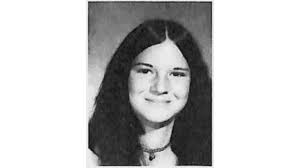
Rita’s description at the time of her disappearance was distinct: she was 17 years old, stood 5 feet 6 inches tall, and weighed approximately 130 pounds. She had long, light-brown hair, a common feature for young women of the era, yet one that, combined with other identifiers, could still be crucial. She was last seen wearing a brown Pendleton shirt, a popular and recognizable item of clothing at the time. Her lower attire consisted of either army fatigue pants or blue jeans, and she wore low-cut blue tennis shoes. A particularly unique and potentially memorable characteristic was her gait: Rita walked with an uneven stride, a detail that could have made her recognizable to anyone who saw her that evening.
The Initial Investigation and the Challenges of Time
In the immediate aftermath of Rita’s disappearance, local law enforcement launched an extensive search and investigation. However, the capabilities and technologies available to investigators in 1973 were vastly different from those utilized today. Forensic science was in its nascent stages compared to current standards, DNA analysis was decades away from widespread use, and digital communication, social media, or comprehensive databases were non-existent. Information dissemination relied on newspapers, local radio, and word-of-mouth, often limiting the reach and speed of appeals to the public.
Investigators specializing in historical cold cases often emphasize the unique challenges presented by disappearances from this era. Crucial initial leads may have gone unpursued due to lack of resources or technology, or simply because their significance wasn’t immediately apparent. Witness accounts, though vital, are susceptible to the natural fading of memory over time, making it increasingly difficult to reconstruct events with precision decades later. Without a crime scene, a body, or immediate evidence of foul play, such cases quickly become complex, relying heavily on community recall and the persistence of dedicated cold case units.
The Weight of Five Decades: A Community’s Enduring Question
For the Jolly family, the last fifty years have been an unimaginable journey of grief, uncertainty, and a relentless search for answers. The absence of a loved one, particularly one suspected of being a victim of foul play, leaves an open wound that never truly heals. The community of West Linn, too, has carried this unresolved question, with Rita Jolly’s name resonating as a reminder of a life interrupted and a mystery that casts a long shadow.
The sustained nature of such cold cases highlights the dedication of law enforcement agencies that continue to review and re-examine these files, even against considerable odds. Experts in cold case resolution often point out that while technology advances, the human element – a piece of forgotten information, a belated confession, or a renewed willingness to speak – frequently holds the key to unlocking these enduring puzzles. Details like Rita’s specific clothing or her distinctive uneven stride, though seemingly minor, are precisely the kind of unique identifiers that can trigger a long-dormant memory.
A Renewed Appeal: The Power of Collective Memory
Fifty years on, authorities continue to appeal to the public for any information regarding Rita Jolly’s disappearance. The passage of time means that individuals who may have been hesitant to come forward in 1973, or who simply did not realize the significance of what they saw or heard, might now be in a position to offer crucial insights. Relationships change, loyalties shift, and the fear of reprisal may have diminished, creating new opportunities for resolution.
Investigators encourage anyone, particularly those who lived in or frequented the West Linn area, especially the Robinwood neighborhood or Sunset Avenue, in June 1973, to reflect on that evening. Even seemingly insignificant details – a conversation overheard, a vehicle observed, an unusual sight – could be the missing piece needed to finally understand what happened to Rita.

The enduring nature of Rita Jolly’s case underscores the importance of community vigilance and the collective responsibility to remember. While the calendar turns another page on this tragic anniversary, the hope remains that someone, somewhere, holds the key to providing answers and bringing closure to a half-century-old mystery that has profoundly affected West Linn.
In early January, Detective Kim Timeus of the Clackamas County Sheriff’s Office partnered with the Clark County Sheriff’s Office in Washington, to take a closer look at suspected serial killer Warren Forrest — though the sheriff’s office stops short of calling him a suspect in the case.
Forrest is serving two life sentences for killing a 20-year-old woman and a 17-year-old woman in the early ’70s. He’s been suspected in the disappearances or deaths of several other women in Clark County.
Timeus said she hopes that by connecting with investigators like Maas, she can get a closer look at the timeline and determine if there are any connections.
Some questioned whether serial killer Ted Bundy was connected to her disappearance, though Jill Jolly said Bundy denied having anything to do with it.
Anyone with information about this case is asked to contact the Sheriff’s Office Tip Line — by phone at 503-723-4949 or by using the online email form at: http://www.clackamas.us/sheriff/tip