The Case Against Richard Allen: Unpacking the Evidence in the Delphi Murders
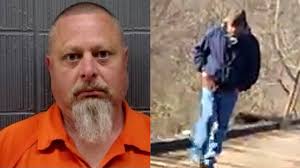
DELPHI, IN – For over six years, the brutal murders of Liberty German, 14, and Abigail Williams, 13, on the Monon High Bridge Trail left this quiet Indiana community in a state of prolonged grief and unanswered questions. The chilling image of a man known only as “Bridge Guy” and a snippet of audio became symbols of a haunting mystery that captivated the nation. Then, in October 2022, a seismic shift occurred with the arrest of Richard Allen, a 50-year-old Delphi resident, on two counts of murder. His apprehension brought a complex mix of relief, disbelief, and a renewed focus on the painstaking investigation.

As the legal proceedings against Allen unfold, local residents, who have lived with the shadow of this tragedy for so long, are intensely focused on understanding precisely what evidence led investigators to believe they had finally found the elusive killer. While much of the evidence remains under seal due to ongoing legal motions and a gag order, key elements have publicly emerged through court documents, preliminary hearings, and reliable media reports, offering a glimpse into the prosecution’s case. An expert analysis of these publicly known details reveals the foundational pillars upon which the charges against Richard Allen rest.
A Long and Arduous Investigation
The discovery of Libby and Abby’s bodies on February 14, 2017, the day after they were last seen walking on the trail, launched one of Indiana’s most extensive and challenging homicide investigations. Despite thousands of tips, multiple suspect profiles, and relentless efforts by law enforcement agencies, the case remained cold for years. The limited evidence – primarily the grainy image and the chilling audio fragment “down the hill” – offered tantalizing but insufficient clues to identify a suspect definitively. The community yearned for closure, and the pressure on investigators was immense. The arrest of Richard Allen was, therefore, not just another development but a pivotal moment that reignited hope for justice.

The Arrest and Initial Revelations
Richard Allen, a seemingly ordinary man with no apparent prior connection to the victims or the initial investigation, lived and worked in Delphi. His arrest came as a profound shock to many who knew him. Immediately following his apprehension, details began to surface, hinting at the nature of the evidence that had gone unnoticed or unlinked for so long. Prosecutors formally charged Allen, stating their belief they had sufficient evidence to connect him directly to the crime scene and the victims. While the full probable cause affidavit remained sealed for months, bits and pieces of the state’s case gradually found their way into public discourse through various legal filings and court statements.
The Cornerstone: The Unspent .40 Caliber Round
Perhaps the most significant and frequently cited piece of evidence against Richard Allen is the discovery of an unspent .40 caliber bullet found between the bodies of Libby German and Abby Williams at the crime scene. This .40 caliber projectile was a critical clue from the outset but had long been an enigma. Its significance surged dramatically following Allen’s arrest.
Investigators allege that the unspent round was fired from a Sig Sauer Model P226 pistol owned by Richard Allen. According to court documents and prosecution arguments, ballistics analysis positively linked the round found at the crime scene to shell casings recovered from Allen’s property. While an unspent round might seem less conclusive than a spent bullet, the prosecution’s theory is that the round was cycled through Allen’s firearm, then ejected or dropped at the scene, implying his direct presence and interaction with the weapon at the time and location of the murders. The specific caliber and the alleged match to his personal firearm provide a direct, tangible link between Allen and the immediate vicinity of the victims at the time of their deaths. This forensic link is considered a powerful piece of circumstantial evidence, placing him squarely at the scene with a potential murder weapon.
Richard Allen’s Alleged Confessions and Statements
Another critical aspect of the prosecution’s case revolves around alleged statements and confessions made by Richard Allen himself. While the specifics have been heavily debated and challenged by the defense, multiple reports indicate that Allen made incriminating statements during his detention.
Among these, it has been reported that Allen allegedly confessed to being on the trail the day of the murders and made admissions regarding his involvement. While the exact wording and context of these statements are crucial and will be thoroughly scrutinized during trial, claims of such confessions, even if not formal legal confessions, can be highly damaging to a defendant, particularly if they indicate knowledge of details only the perpetrator would know. The defense, however, has vigorously argued that any such statements were made while Allen was in a state of diminished mental capacity, potentially under duress, or as a result of medication, casting doubt on their reliability and admissibility. This will be a significant battleground in court, as the voluntariness and lucidity of his statements will be paramount.
Circumstantial Evidence and Allen’s Presence
Beyond the physical evidence of the unspent round and alleged confessions, the prosecution has likely compiled a body of circumstantial evidence designed to place Allen at the crime scene and establish a timeline. This could include:
- Allen’s own admission of being on the trail: Reports suggest Allen admitted being on the Monon High Bridge Trail on February 13, 2017, the day the girls were killed. While many people were on the trail that day, his specific admission, combined with other evidence, strengthens the prosecution’s timeline.
- Geographic Proximity: Richard Allen lived in Delphi, providing easy access to the trail system where the murders occurred. While not incriminating on its own, it removes any alibi based on distance from the scene.
- Lack of Alibi: It is presumed that investigators meticulously vetted Allen’s activities for the day in question. The absence of a verifiable, ironclad alibi for the critical timeframe would further support the prosecution’s narrative.

The Defense’s Counter-Arguments and Challenges
It is crucial to understand that the evidence presented by the prosecution is vigorously challenged by Richard Allen’s defense team. Their strategy has focused on several key areas:
- Mental State and Admissibility of Confessions: The defense has argued that Allen’s alleged confessions were not reliable, contending that he was not in a sound mental state when they were made. They have sought to suppress these statements, arguing they were obtained improperly or under conditions that rendered them involuntary.
- Chain of Custody and Integrity of Evidence: The defense has questioned the handling and chain of custody of the unspent .40 caliber round, suggesting potential contamination or mishandling that could compromise its evidentiary value. They have also raised questions about the ballistics analysis itself.
- Alternative Theories and DNA Evidence: While the prosecution has focused on the bullet and Allen’s statements, the defense has pointed to other potential suspects and the complex nature of DNA evidence found at the scene, which they argue does not definitively link Allen to the victims. This has been a contentious point, with the defense alleging the presence of unknown male DNA that does not match Allen.
The Path Forward for Delphi
As the legal process continues with pretrial hearings and the highly anticipated trial, the community of Delphi remains in a state of heightened anticipation. The detailed exploration of the evidence against Richard Allen is not merely about legal technicalities; it is about providing the ultimate answers for a community that has suffered immensely. Each piece of evidence, whether it be the unspent round, an alleged confession, or circumstantial details, represents a step toward understanding what transpired on that chilling February day.
While the evidence is complex and subject to intense legal scrutiny, the publicly available details paint a picture of how investigators, after years of tireless work, built a case against Richard Allen. For the residents of Delphi, truly understanding the evidence is a critical step towards achieving the long-awaited closure and justice for Libby German and Abby Williams. The courtroom will be the ultimate arbiter, but for now, the community watches, hoping that the detailed presentation of this evidence will finally bring peace to a town forever marked by tragedy.