The Mysterious Disappearance of Tara Calico: A Case that Continues to Intrigue Researchers
On September 20, 1988, a young woman named Tara Calico vanished while riding her bicycle in Belen, New Mexico. The circumstances surrounding her disappearance were shrouded in mystery, and despite numerous investigations and leads, her fate remains unknown to this day. As researchers continue to study the case, new evidence and theories have emerged, shedding light on the complexities of this enigmatic disappearance.
Tara Calico, 19, was a college student who lived with her mother, Patty Doyle, in Belen. On the day of her disappearance, Tara had been riding her pink bicycle, a Schwinn, along a rural road, approximately 3 miles from her home. She was last seen around 9:30 am, and her disappearance was reported by her mother when she failed to return home by 4 pm.

The initial investigation into Tara’s disappearance was led by the Belen Police Department, with assistance from the New Mexico State Police. The authorities launched a thorough search of the area, scouring the countryside, interviewing witnesses, and following up on potential leads. However, despite their efforts, no signs of Tara or her bicycle were found.
One of the most intriguing aspects of the case is the lack of evidence. There were no witnesses who saw Tara being taken or abducted, and no surveillance footage captured her disappearance. The only clue was a suspicious vehicle, described as a light-colored pickup truck, seen in the area around the time Tara vanished. However, the description was vague, and the vehicle was never identified.
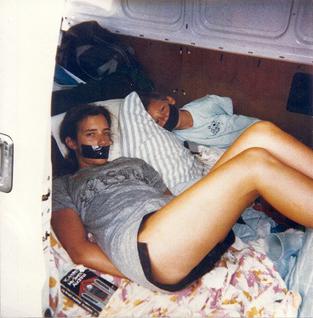
In the years following Tara’s disappearance, several leads and tips were investigated, but none yielded conclusive results. In 2009, a Polaroid photograph surfaced, which some believed could be connected to Tara’s disappearance. The photograph showed two young women, one of whom bore a resemblance to Tara, and the other to a young girl who was later identified as Michelle Garvey, a 9-year-old girl who had gone missing in 1988. The photograph was deemed to be potentially significant, as it appeared to be taken in the late 1980s, based on the clothing and hairstyles of the subjects.
The Polaroid photograph sparked a renewed interest in the case, and researchers began to re-examine the evidence. Some theorized that Tara might have been abducted by a serial offender, possibly someone who was also responsible for other missing persons cases in the region. Others suggested that Tara might have run away from home, possibly due to family conflicts or personal issues. However, these theories were not supported by conclusive evidence, and the case remained a mystery.

In recent years, advances in technology have allowed researchers to re-analyze the evidence using new methods. For example, forensic experts have re-examined the Polaroid photograph using digital enhancement techniques, which have revealed potential clues that were not visible to the naked eye. Additionally, DNA analysis has been conducted on various items associated with the case, including the Polaroid photograph, although the results have not been conclusive.
The Calico case has also been the subject of extensive research by criminologists and psychologists, who have sought to understand the motivations and behaviors of potential offenders. Some researchers have suggested that Tara’s disappearance might be linked to a larger pattern of crimes, possibly committed by an individual or group with a specific modus operandi. Others have explored the role of social and cultural factors, such as the impact of rural isolation and the dynamics of family relationships.
The Tara Calico case is a prime example of the complexities and challenges involved in investigating missing persons cases. The lack of evidence, combined with the passage of time, has made it difficult to determine what happened to Tara. However, researchers continue to be drawn to the case, driven by a desire to understand the circumstances surrounding her disappearance.
As the case remains unsolved, the Calico family continues to hold out hope that Tara will be found. Patty Doyle, Tara’s mother, has been a tireless advocate for her daughter, working with law enforcement and researchers to keep the case in the public eye. In recent years, the family has used social media and other platforms to raise awareness about the case, sharing updates and information in the hopes of generating new leads.
The disappearance of Tara Calico is a haunting reminder of the many unsolved missing persons cases that continue to affect families and communities across the United States. As researchers continue to study the case, they are driven by a commitment to uncovering the truth and bringing closure to those affected. While the mystery surrounding Tara’s disappearance remains unsolved, the ongoing efforts to investigate and understand the case serve as a testament to the enduring power of hope and the human spirit.
In conclusion, the disappearance of Tara Calico remains one of the most intriguing and baffling cases in the annals of American true crime. As researchers continue to explore new leads and theories, the case serves as a reminder of the complexities and challenges involved in investigating missing persons cases. While the outcome remains uncertain, the ongoing efforts to solve the case demonstrate a steadfast commitment to uncovering the truth and bringing justice to those affected.